
The Global AI Radar: From Experimentation to Core Infrastructure
The global adoption of Artificial Intelligence is accelerating at an unprecedented pace. Organizations worldwide are moving beyond pilot projects to integrate AI deeply into their strategic operations. Currently, an impressive 88% of organizations utilize AI in at least one business function. However, the true competitive advantage lies in scaling these capabilities; presently, only 30% to 35% of enterprises have successfully implemented AI on an enterprise-wide scale.
The financial trajectory of AI underscores its monumental impact. The global AI market, which exceeded $390 billion in 2025, is projected to experience explosive growth, reaching an estimated $3.4 trillion by 2033. This growth is fueled by massive investments, with nearly 50% of global startup funding now directed toward AI-driven ventures.
The takeaway is clear — AI is no longer just a supplementary tool. It is rapidly becoming the core infrastructure upon which future business operations, including advanced transport networks, will be built.

Section 1 — Global AI Radar
AI Risks & Governance: Navigating the New Reality
While the potential of AI is vast, it introduces new strategic risks that organizations must proactively manage. The rapid deployment of AI technologies has brought several critical challenges to the forefront:
To mitigate these risks, a robust governance framework is essential. Key concerns that must be addressed include algorithmic bias, ethical considerations, operational transparency, and comprehensive data governance.
Long-term success in AI depends heavily on establishing trust, maintaining control, and enforcing strict governance protocols — mere adoption is not enough to guarantee positive outcomes.

Section 2 — AI Governance
AI Productivity & Business Impact: Empowering the Workforce
AI is fundamentally transforming workplace productivity and redefining how businesses operate. By automating routine and repetitive tasks, AI enables a significant shift in workforce dynamics.
The integration of AI tools can lead to up to a 40% increase in overall operational efficiency. Furthermore, it is estimated that 60% to 70% of current tasks can be automated or significantly augmented by AI technologies. This automation allows employees to pivot away from manual data processing and focus on higher-value, strategic thinking.
| Productivity Metric | Estimated Impact |
|---|---|
| Operational Efficiency | Up to 40% Increase |
| Task Automation Potential | 60% - 70% of Routine Tasks |
| Decision Making | Faster, Data-Driven Insights |
The ultimate outcome is the creation of smarter operations and an AI-augmented workforce that is more agile, innovative, and focused on strategic objectives.

Section 3 — AI Productivity
AI in Action: Transforming the Railways
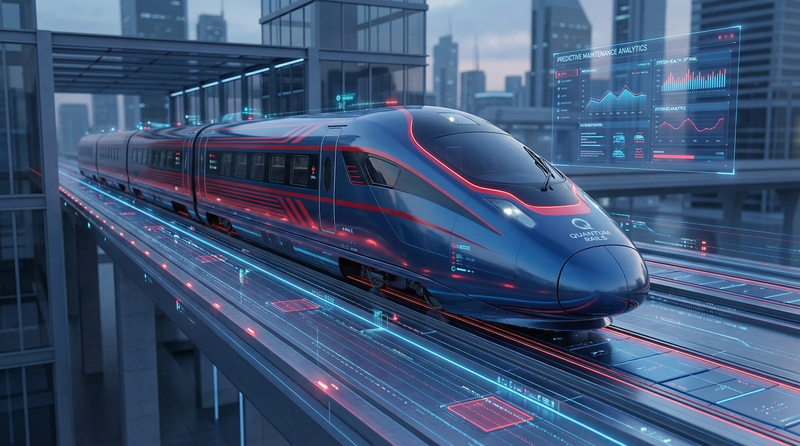
In the railway sector, AI is revolutionizing maintenance and operational efficiency. Traditional reactive maintenance is being replaced by proactive strategies powered by machine learning.
These advancements lead to a safer, more efficient, and highly cost-effective transport ecosystem.
Section 4 — Railways
AI in Action: Smart Traffic Systems
Urban mobility is being redefined by AI-driven smart traffic management systems. As cities grow, managing congestion and ensuring smooth traffic flow becomes increasingly complex.
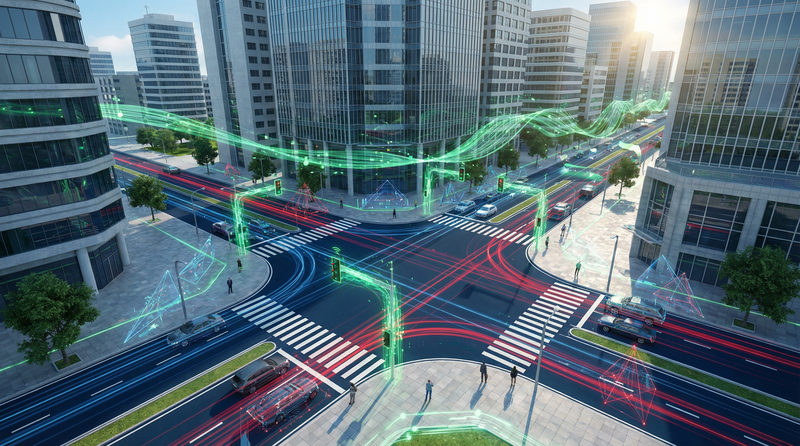
AI optimizes city traffic by analyzing real-time data from cameras, sensors, and GPS devices. This intelligent analysis can reduce traffic congestion by up to 30%. Furthermore, AI systems can dynamically adjust traffic signals based on current flow conditions, rather than relying on fixed timers. In the event of an incident, AI can detect accidents instantly, alerting emergency services and rerouting traffic to minimize delays.
The implementation of smart traffic systems results in lower carbon emissions, faster mobility for citizens, and a significant improvement in the quality of urban life.
Section 5 — Smart Traffic
AI in Action: Airports & Aviation
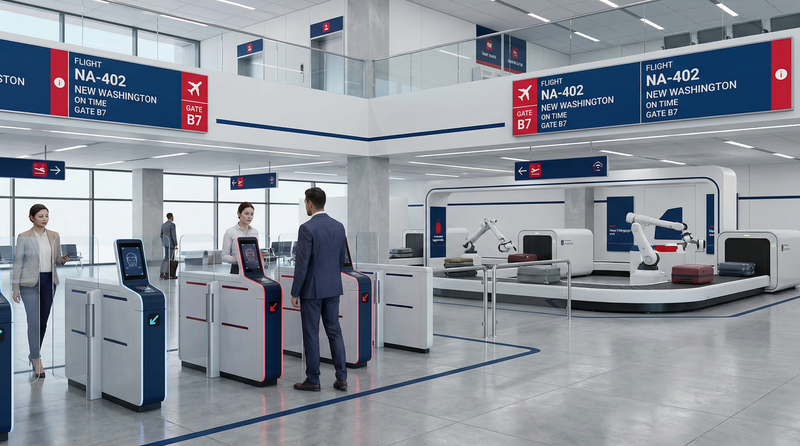
The aviation industry is leveraging AI to create seamless and secure travel experiences for passengers while optimizing complex ground operations.
These innovations ensure a seamless travel experience for passengers while significantly enhancing operational safety and efficiency.
Section 6 — Aviation
AI in Action: Logistics & Supply Chain
Global supply chains are notoriously complex, but AI is providing the tools necessary to build resilience and drive efficiency.
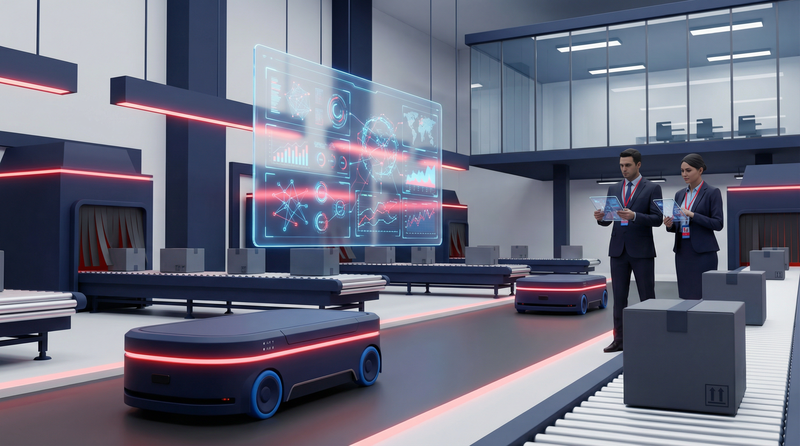
The integration of AI in logistics operations can lead to a remarkable 20% to 40% reduction in costs. This is achieved through advanced demand forecasting, which uses historical data and market trends to predict future inventory needs with high accuracy. Furthermore, AI excels at route optimization, calculating the most efficient delivery paths in real-time by considering variables such as traffic, weather, and fuel consumption.
The application of AI creates faster, smarter, and more resilient supply chains capable of adapting to global disruptions.
Section 7 — Logistics
AI in Action: Public Safety & Surveillance
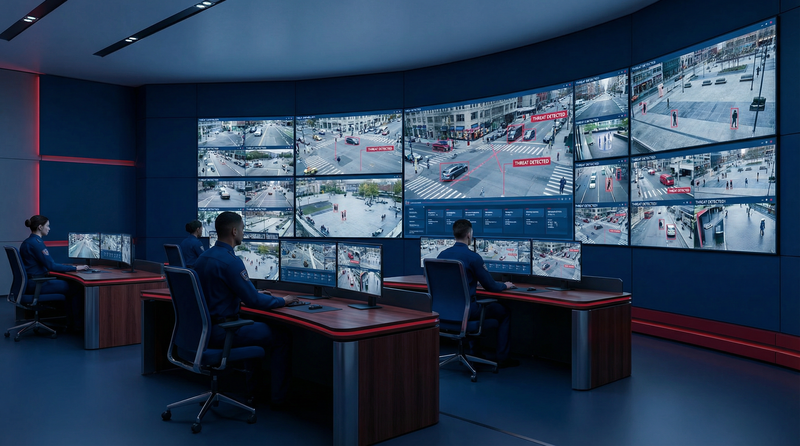
Ensuring public safety is a paramount concern for transport authorities, and AI is playing a crucial role in strengthening security measures across transit networks.
The deployment of AI in surveillance fosters proactive security measures, ultimately leading to safer transit environments and more secure cities.
Section 8 — Public Safety
Academic Spotlight: AI and Smart Transport Research in Dubai
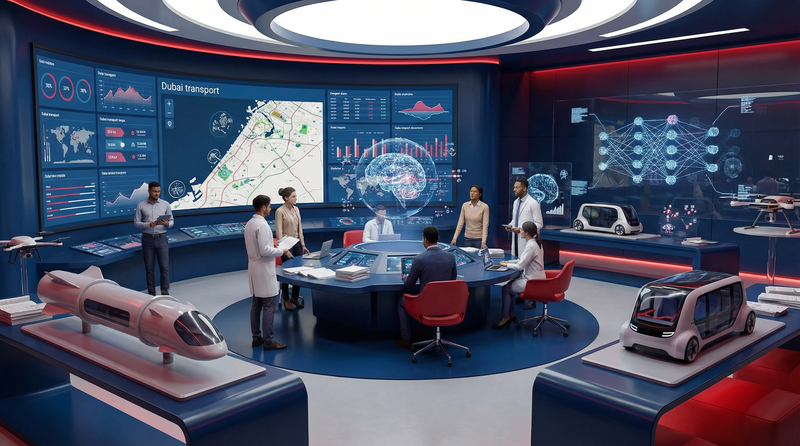
The RTA's commitment to innovation is mirrored by active academic research focusing on Dubai's transport ecosystem. Recent studies highlight the transformative potential of AI in our specific context:
1. Leveraging AI and IoT for Smart Transportation in the UAE — This 2025 study explores the integration of AI and IoT across Dubai's transport networks. It highlights the RTA's ambitious plans to deploy 4,000 autonomous vehicles, aiming for 25% of all trips to be autonomous. The research specifically emphasizes the role of AI in Autonomous Emergency Braking (AEB) systems and proposes stronger government-academic partnerships.
2. AI-Driven Energy Optimization in Urban Logistics — A recent study in the journal Sustainability examined how AI optimizes energy consumption in Dubai's urban logistics. The researchers found that AI solutions led to a 13.9% decrease in fuel consumption and a 17.3% decrease in energy use.
3. Innovative Pavement Management System for Sustainable Roads — Research published in 2025 demonstrates how AI and big data are revolutionizing road maintenance in Dubai. By combining smartphone-based roughness detection with advanced laser scanning, this hybrid system allows for economical, real-time monitoring of road conditions.
Section 9 — Academic Spotlight
AI at Work: Enhancing Staff Efficiency
As AI transforms our external operations, it is equally vital for enhancing our internal productivity. Equipping our staff with the right AI tools can significantly reduce administrative burdens and accelerate high-value work.
Embracing these tools will empower RTA employees to work smarter, fostering a culture of continuous innovation from the inside out.

Section 10 — AI at Work